

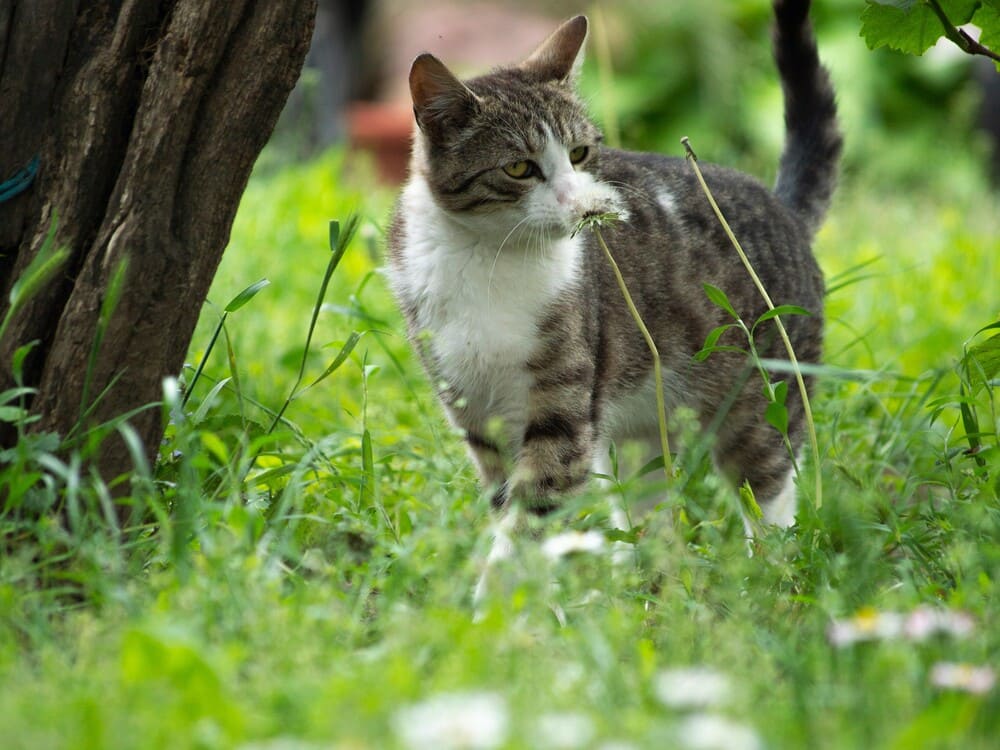
Cat-proof garden without plants?
When I first searched the internet for information on plants that are toxic to cats, I was overcome with a slight panic. Almost all indoor and outdoor plants are toxic to cats, or at the very least cause gastrointestinal problems. So what can you do? Not have any live plants in your home and only grow ordinary grass (lawn) in your garden? It took me a while to find the right approach and create a short guide for cat owners.

Please, take this very seriously!
Some cat owners believe that cats are smart enough to avoid toxic plants and that cases of poisoning in cats are very rare. However, official reports and research provide much less optimistic statistics.
To be fatally poisoned, a cat doesn’t even need to eat a plant intentionally.
Take lilies, for example, one of the most toxic plants for cats. This plant has flowers. The flowers have pollen. When the flowers wilt, they fall to the ground with the pollen. A cat walks on the pollen and then licks its paws. The pollen will cause serious damage to the cat’s kidneys. This can happen immediately or over a longer period of time if the cat ingests small amounts of pollen over several days or weeks.
It is important to learn the names and appearance of the most toxic plants that can kill or seriously harm your cat’s health, even if consumed in very small amounts.
Observe your cat’s reaction to certain plants
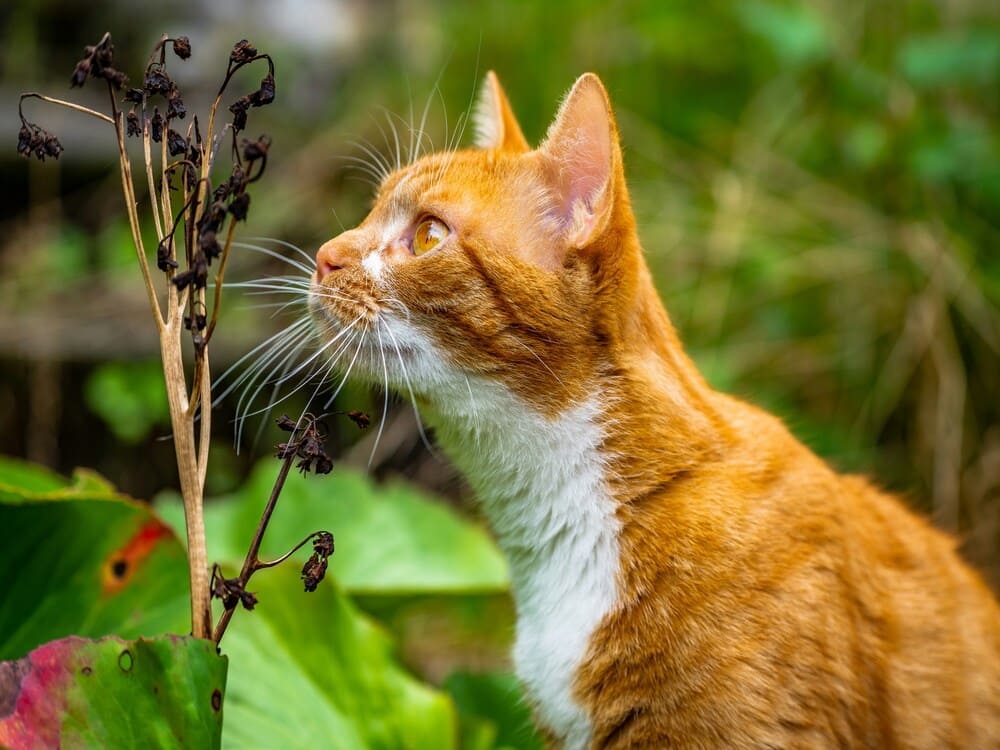
Mint and tomato plants are toxic to cats. Fortunately, cats dislike the smell of these plants. It is therefore important to know whether or not your cat likes a particular plant. After creating a cat-proof garden, never leave your cat unsupervised for the first two weeks. Observe your cat’s reaction to plants and if you notice that they are taking too much interest in a potentially dangerous plant, remove it (temporarily) or protect it with netting.
Research, compare, and use common sense
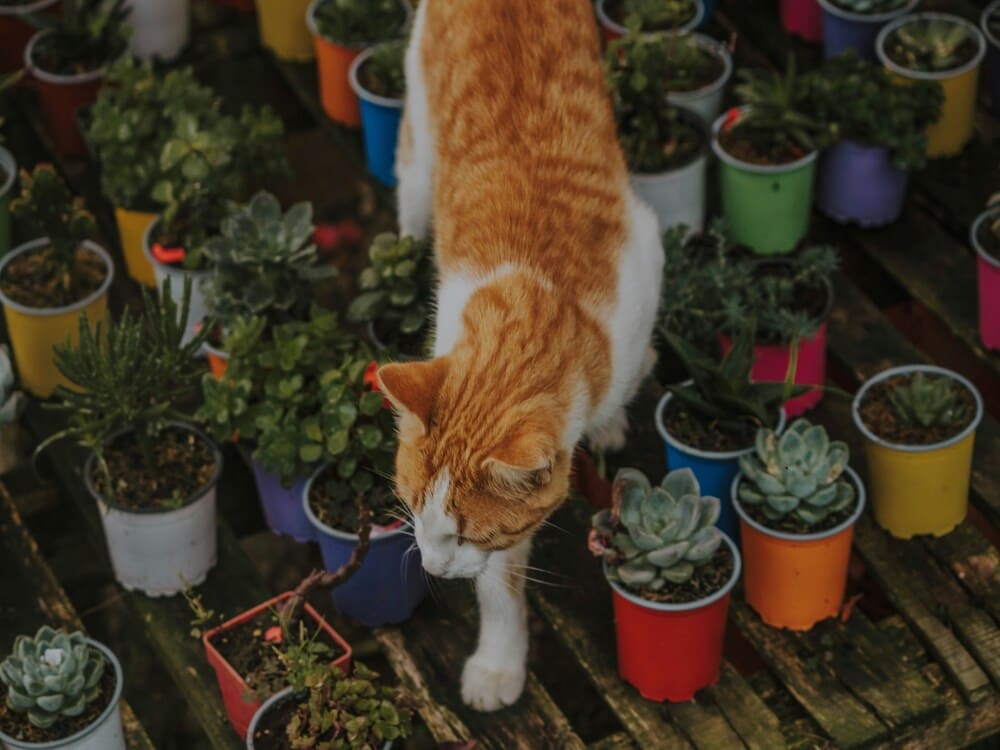
Unfortunately, there is simply no comprehensive and reliable list of plants that are toxic or non-toxic to cats. You will need to gather information (which can be highly controversial!) from various sources. Sometimes it is possible to tell whether a plant is toxic or not simply by looking at it. Poisonous plants often have very brightly colored leaves and/or flowers. Poisonous insects, for that matter, are also very colorful. This is a natural mechanism to warn other living creatures of danger. In addition, poisonous plants usually have a strong smell of essential oils, and their stems may contain a fragrant juice.
Use mobile apps
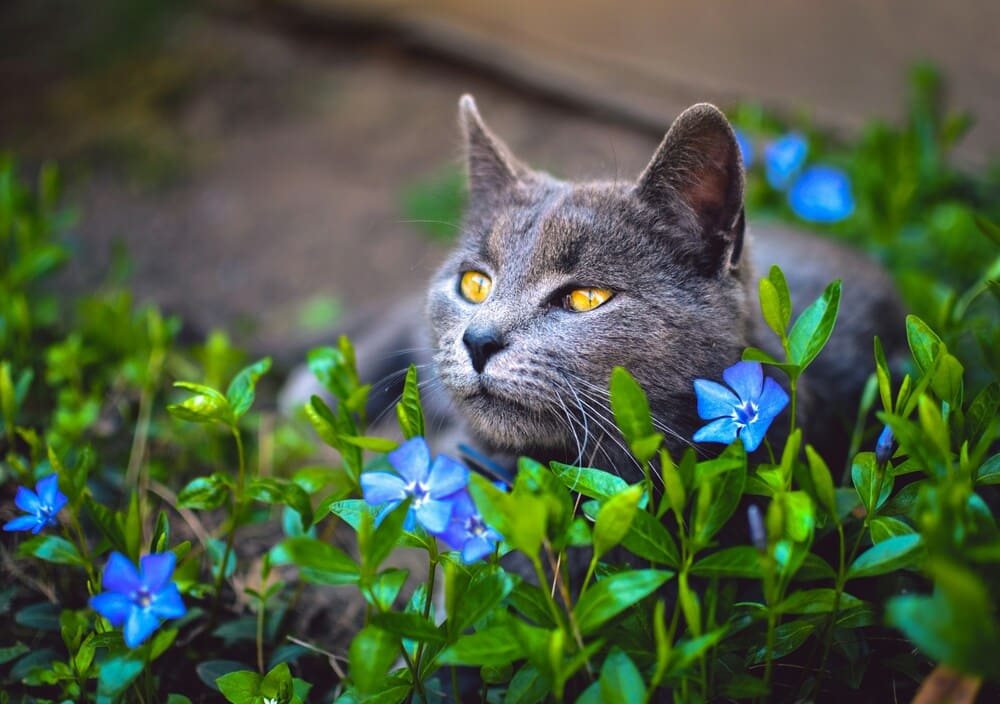
If you find a suspicious plant and don’t know its name, you can always use a free mobile app such as PlantNet, for example. Simply take a couple of photos of the plant with your cell phone camera and the app will attempt to identify it.
Be careful
You should be especially careful when choosing indoor and outdoor plants if your cat suffers from chronic health problems such as kidney failure, liver disease, or asthma. Kittens are also particularly at risk, as they are always very curious and want to try everything with their teeth.